
Mobile SEO Guide for Better Search Performance
A practical mobile SEO guide for business owners and marketing teams that need stronger search visibility, cleaner user journeys, better measurement, and more
SearchAligned Team
SearchAligned Editorial Team
Introduction
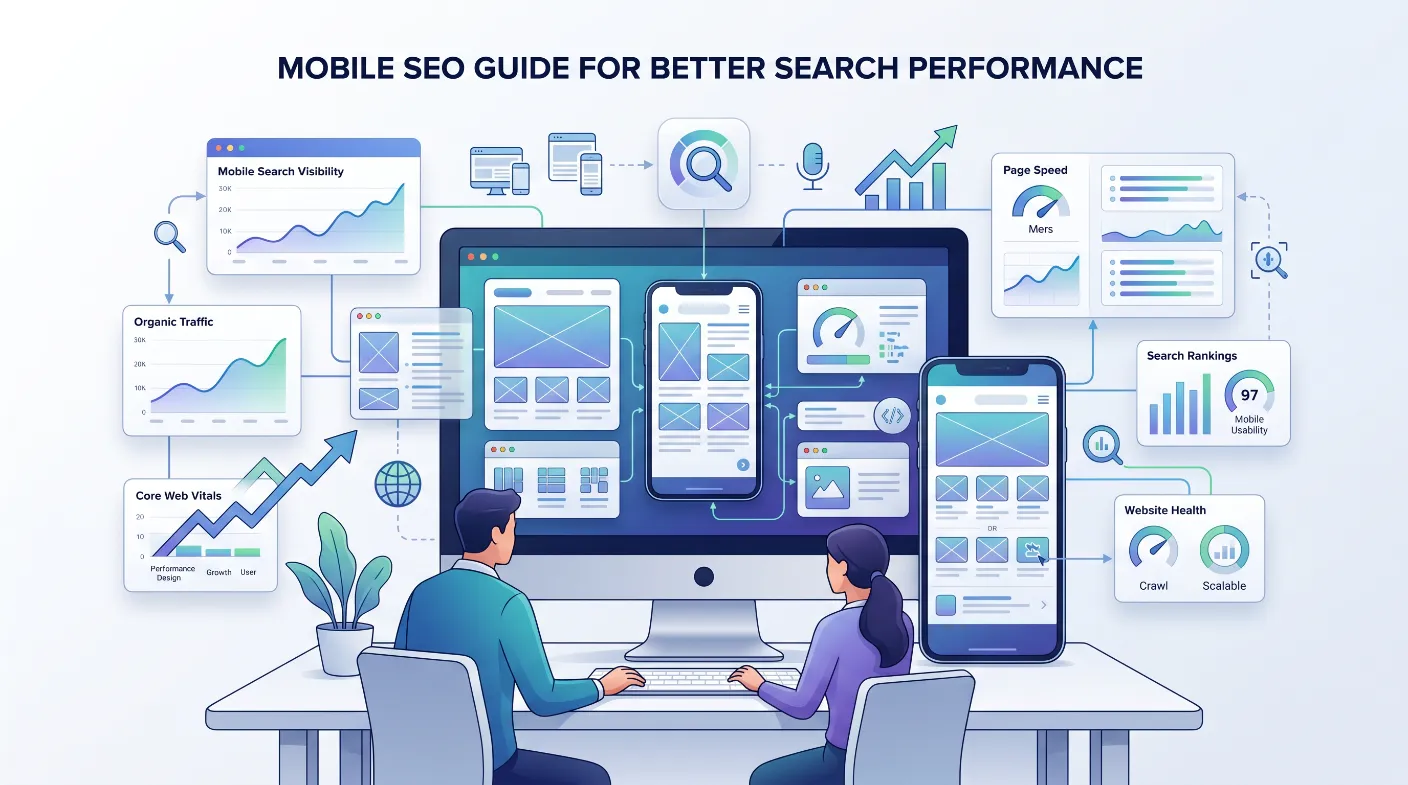
Mobile SEO Guide for Better Search Performance gives business owners, marketers, and product teams a practical way to connect search visibility with measurable growth. The goal is not to chase every tactic or tool. The goal is to understand which pages, experiences, and signals help qualified visitors discover the business and take the next useful step.
This guide explains how to plan mobile seo, prioritize improvements, structure content, support technical quality, connect internal links, and measure outcomes. SearchAligned can help through specialist SEO services, and teams that need a wider roadmap can review the SearchAligned SEO process.
Table of Contents
- Why this topic matters for growth
- How to prioritize the work
- Build the right page structure
- Improve technical and user experience signals
- Use internal links with purpose
- Measure the signals that matter
- Common mistakes to avoid
- A 30-day implementation plan
- When to get specialist support
- Frequently Asked Questions
Why this topic matters for growth
mobile SEO matters because organic performance is rarely limited by one isolated ranking factor. A business may have useful services, strong proof, and helpful expertise, yet still lose demand when pages load slowly, content does not answer intent, or visitors cannot find a clear path to contact, book, compare, or buy.
For a growing business, the practical question is simple: which audience should find this page, what should the page prove, and what should the visitor do next? When mobile seo is framed around those questions, the team can focus on improvements that protect visibility and increase qualified demand.
Connect SEO decisions to revenue paths
Start with pages that already support leads, sales calls, app installs, product discovery, local enquiries, or important assisted conversions. Review the offer, proof, copy depth, technical access, tracking, and conversion path. One meaningful improvement on a high-value page can teach the team more than scattered edits across low-impact URLs.
How to prioritize the work
The strongest mobile seo plans rank tasks by impact, confidence, and effort. Impact asks whether the work affects important URLs or meaningful search demand. Confidence asks whether the decision is backed by analytics, Search Console data, crawl findings, customer questions, or competitor patterns. Effort keeps the roadmap realistic for marketing and development teams.
A useful first pass includes these actions: audit the current page or template, match the page to search intent, improve headings and supporting copy, strengthen internal links, validate tracking, and review qualified lead quality. Each action should have an owner and a definition of done.
Choose the right starting point
If the site has technical blockers, fix access, rendering, speed, and indexability first. If pages are thin or unclear, improve content structure and proof. If strong pages are buried, strengthen navigation and internal links. The sequence should reflect the constraint most likely limiting growth.
Build the right page structure
Every important page connected to mobile seo should have one clear H1, descriptive H2 sections, useful H3 subsections, a focused SEO title, a meta description written for searchers, and body copy that answers intent early. Structure helps readers scan and helps search engines understand how the page fits the site.
The introduction should confirm the reader is in the right place. Middle sections should explain criteria, process, tradeoffs, examples, and mistakes. The conclusion should point toward the next useful action. If the page includes a featured image, the alt text should describe the subject plainly without keyword stuffing.
Write for the decision maker
Business owners and marketing leaders need practical guidance, not generic jargon. Explain what to check, why it matters, who should own it, and how success will be measured. That makes the content more useful and improves trust in the business behind the page.
Improve technical and user experience signals
Technical quality supports every mobile seo recommendation. Pages should be crawlable, indexable when appropriate, fast on mobile connections, stable while loading, and easy to use with clear navigation and accessible content. Metadata, canonical tags, image dimensions, structured data, and analytics events should match the visible page.
Teams should test the page as customers experience it, not only from a fast office connection. Check mobile layout, form usability, tap targets, Core Web Vitals, image weight, JavaScript rendering, and whether critical content appears reliably. A page that is difficult to use rarely turns visibility into business value.
Keep implementation observable
Document what changed, when it shipped, which URLs were affected, and which metrics should move. This makes future diagnosis easier if rankings, traffic, or conversions shift after a release.
Use internal links with purpose
Internal links are one of the easiest ways to make mobile seo more effective. Link related blog posts to relevant service pages, link service pages to supporting guides, and use descriptive anchor text. A reader should understand why the next page is worth visiting before they click.
For SearchAligned, useful internal paths include technical SEO, on-page SEO, content marketing, link building, and contact. Those links connect education to commercial intent without forcing a hard sell.
Review older pages after publishing
New articles should not sit alone. Add links from older related pages, update hub content, and make sure the blog listing exposes the article. This keeps the publishing schedule useful for topical authority rather than producing isolated posts.
Measure the signals that matter
Measurement for mobile seo should include visibility, engagement, and business outcomes. Track impressions, clicks, indexed pages, rankings for priority queries, engaged sessions, form submissions, calls, bookings, installs, and assisted conversions. No single metric tells the full story.
Pair search data with customer and sales feedback. If a page gets impressions but weak clicks, improve the title and description. If it gets clicks but weak leads, improve the offer and internal links. If performance drops after a release, inspect technical changes before rewriting content.
Diagnose before rewriting
The diagnosis should determine the fix. Rewriting content cannot solve a blocked page, a broken form, a slow template, or unclear tracking. Good SEO work separates visibility problems from conversion problems.
Common mistakes to avoid
The most common mobile seo mistakes are publishing without a clear target audience, copying competitors without understanding intent, treating every audit warning as equally important, and measuring activity instead of outcomes. These mistakes waste budget because they create movement without direction.
Another frequent issue is changing URLs, titles, navigation, templates, or tracking without recording the baseline. Before changing important pages, document traffic, rankings, conversions, internal links, metadata, and current technical status.
Protect what already works
Do not improve one signal while breaking another. A faster template that removes helpful copy can reduce relevance. A stronger title that overpromises can hurt trust. A new content hub that ignores redirects can waste authority. Good SEO balances visibility, usefulness, and conversion.
A 30-day implementation plan
In week one, identify the highest-impact page group for mobile seo and collect baseline data. In week two, fix obvious blockers and update the content brief. In week three, publish the revised page or template. In week four, review indexing, clicks, conversions, and any technical warnings.
Keep the plan small enough to finish. One completed improvement on a meaningful page is more valuable than a broad audit with no owner. After the first cycle, repeat the process for the next page group and document what changed.
Assign ownership clearly
Marketing usually owns intent, messaging, and measurement. Development often owns rendering, speed, schema, redirects, and data quality. Leadership owns tradeoffs. When everyone knows their role, mobile seo work moves faster and creates fewer surprises.
When to get specialist support
Specialist support is useful when mobile seo affects revenue pages, site architecture, migrations, analytics, structured data, or competitive markets. An experienced SEO partner can separate urgent fixes from low-value noise and help teams ship changes with less risk.
The right partner should explain priorities in plain business terms: what is broken, what it affects, how to fix it, and how success will be measured. That standard keeps the work accountable and makes the site stronger after each release.
Conclusion
Mobile SEO Guide for Better Search Performance works best when it is connected to customer intent, technical quality, internal links, and measurable outcomes. Start with the pages that matter most, make the page easier to understand, and track whether organic visitors take the next useful step.
SearchAligned can help businesses turn mobile seo into a practical roadmap that improves visibility and qualified demand. The strongest results usually come from consistent publishing, careful technical checks, and focused improvements to pages that already influence growth.
Frequently Asked Questions
How often should a business review mobile seo?
Review it quarterly and after major site changes. High-value pages should also be checked after redesigns, migrations, new campaigns, or noticeable ranking movement.
Can mobile seo help a small business?
Yes. Small businesses benefit when the work is focused on service pages, useful content, speed, clear conversion paths, and measurable lead quality instead of scattered tactics.
What should be measured first?
Start with impressions, clicks, organic conversions, indexed important pages, and lead quality. Rankings matter, but they should be interpreted alongside business outcomes.
Who should own mobile seo work?
Marketing should own intent and content quality, developers should own technical implementation, and leadership should make prioritization decisions based on impact.